Verified Excel workbook
Free 2026 Construction Bid Comparison Workbook in Excel
Compare subcontractor bid cost and allocation lines in USD, with exceptions, aging, and variance, in this free 2026 Excel workbook.
Download this free Construction Subcontractor Bid Comparison Workbook in Excel to organize user-entered cost and allocation lines for subcontractor bid comparison. Record the project, bid package or scope, cost code or allocation target, vendor, transaction date, approval status, record owner, and source reference. The workbook calculates USD amount views, allocation results, variance, and open-item aging from your entries.
Use the workbook as an internal project-controls register when records need consistent ownership and follow-up. Source evidence stays outside the workbook, while Source Reference serves as a locator to the related bid, proposal, estimate, email, or document-control record. Team review is still required before acting on any result.
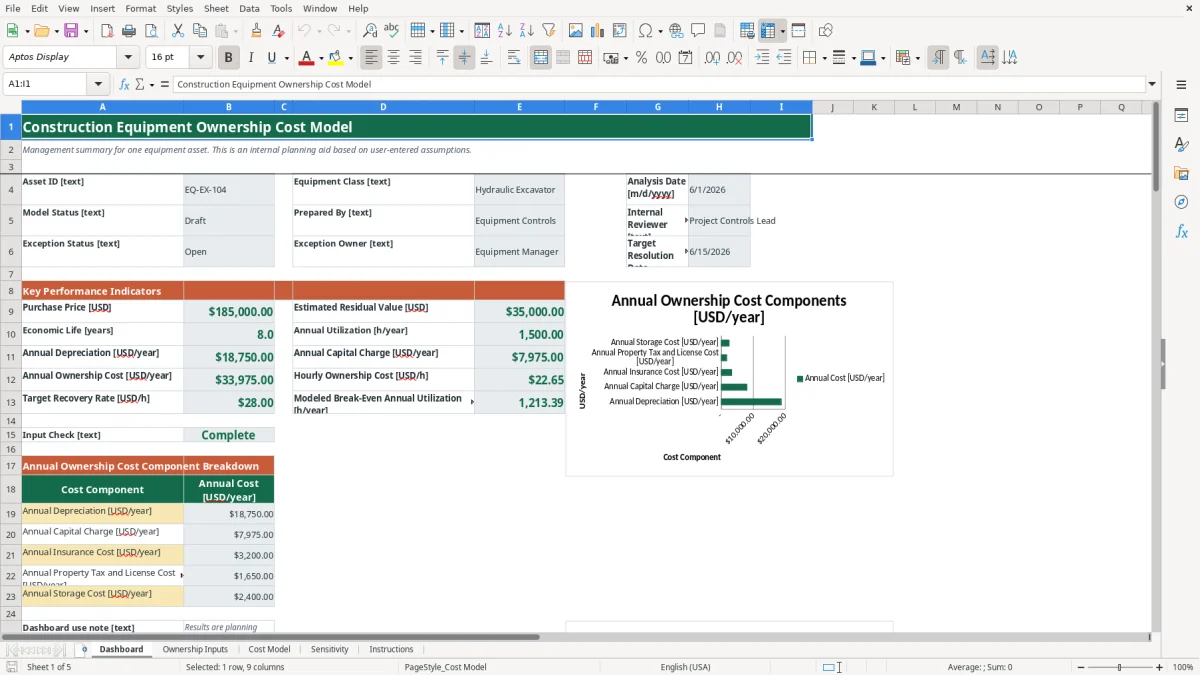
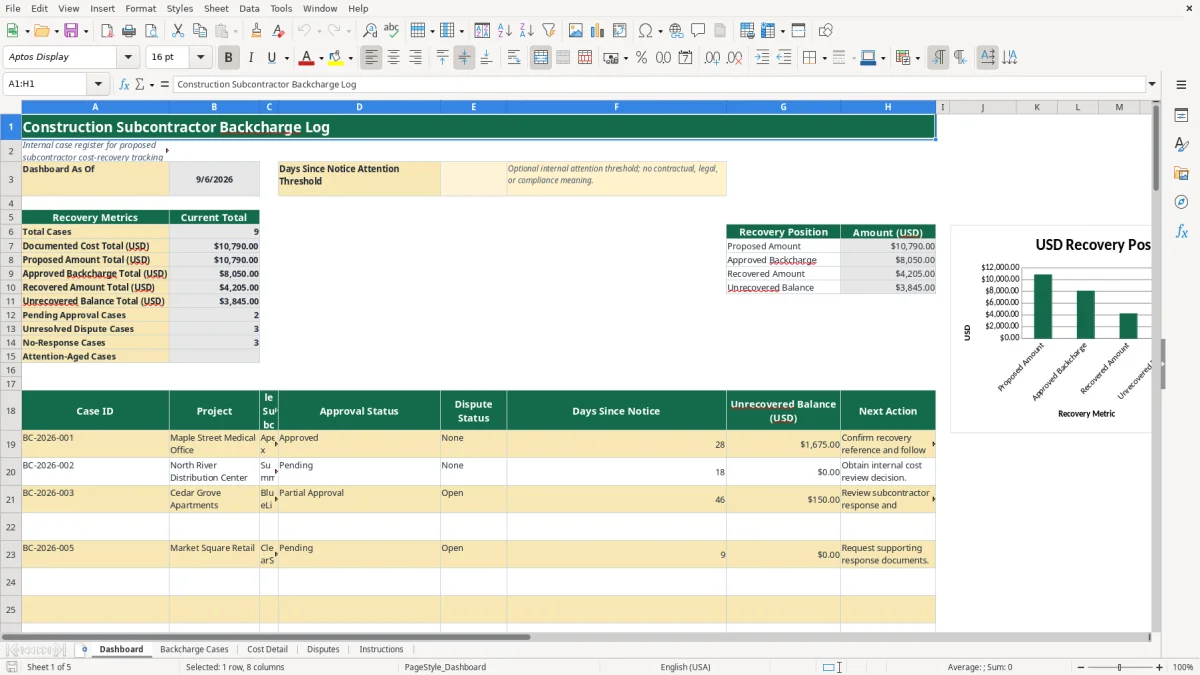
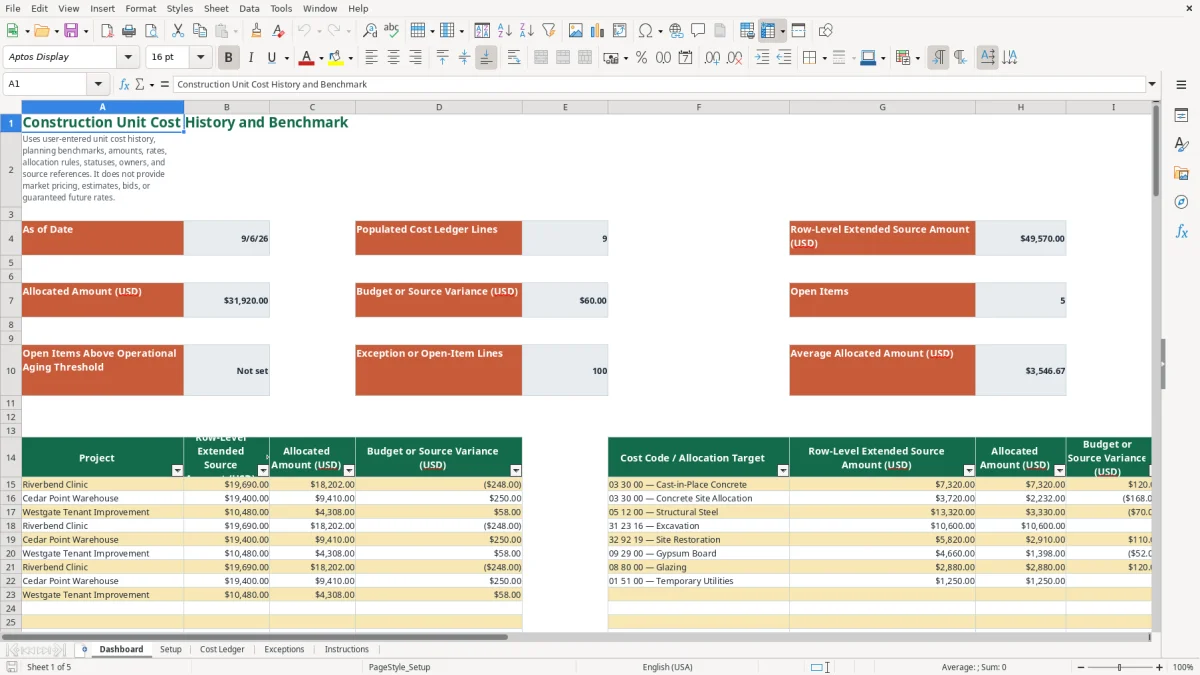
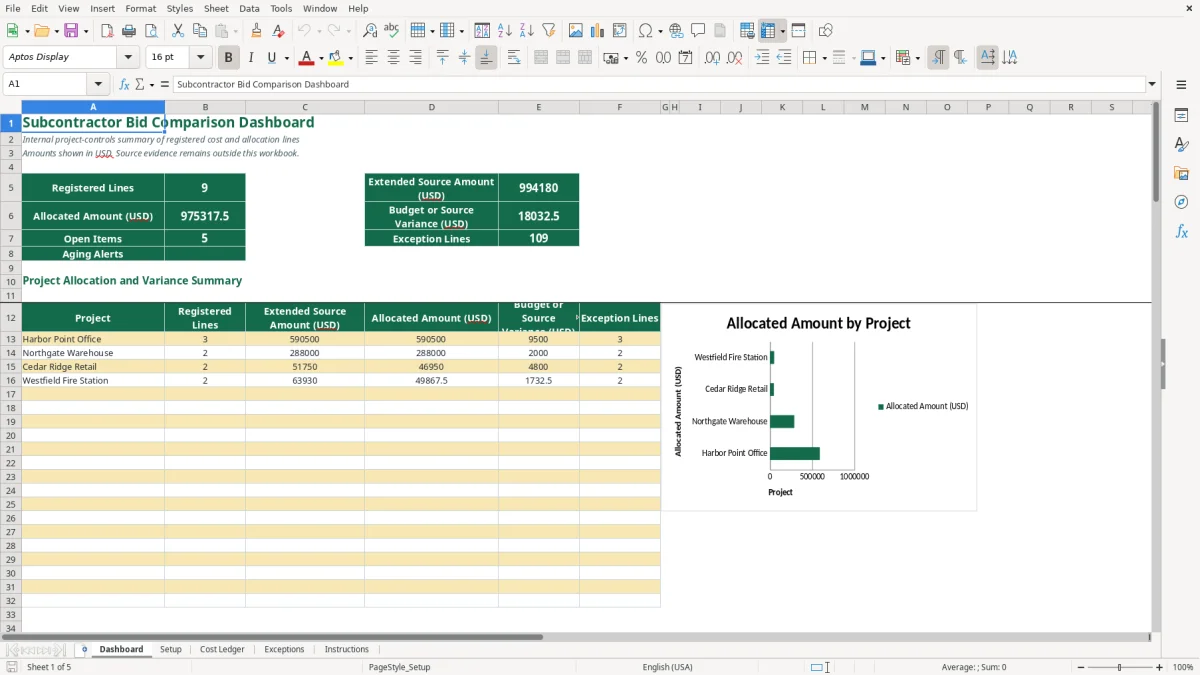
Final workbook preview
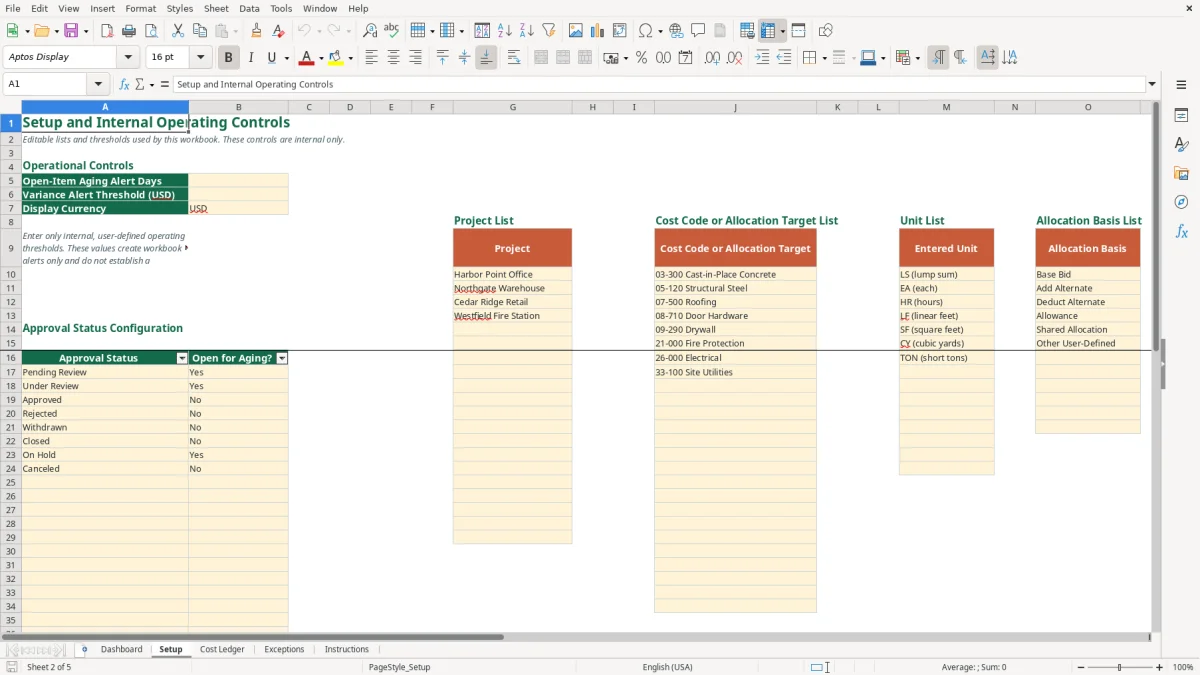
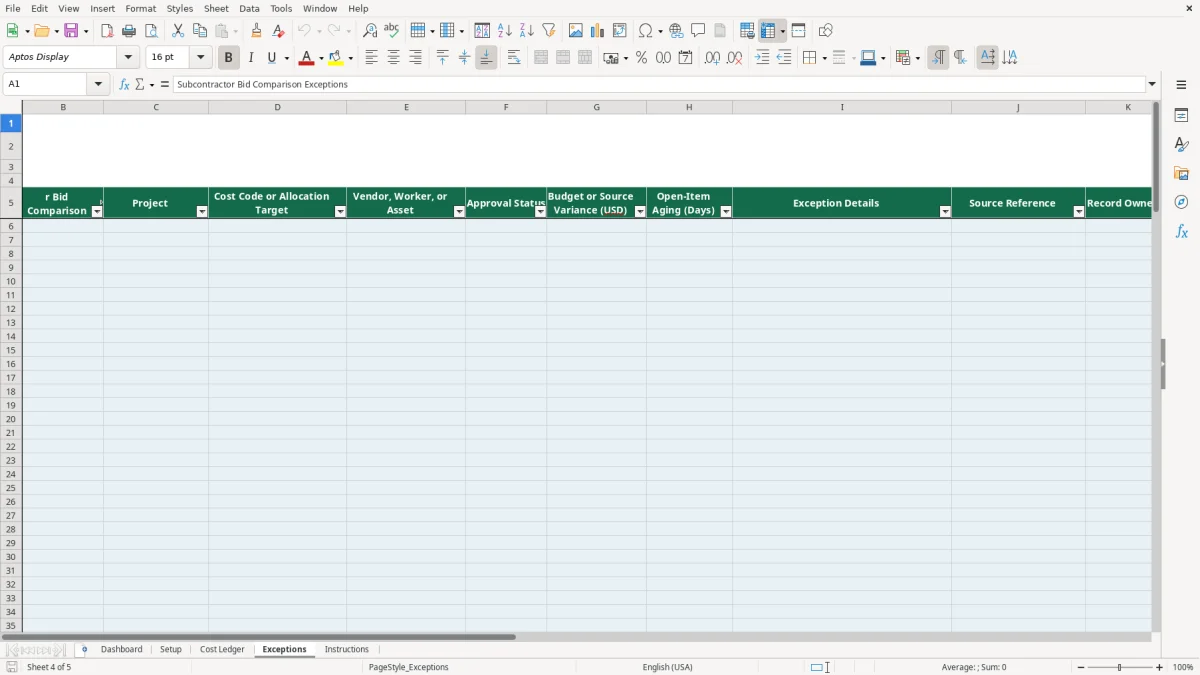
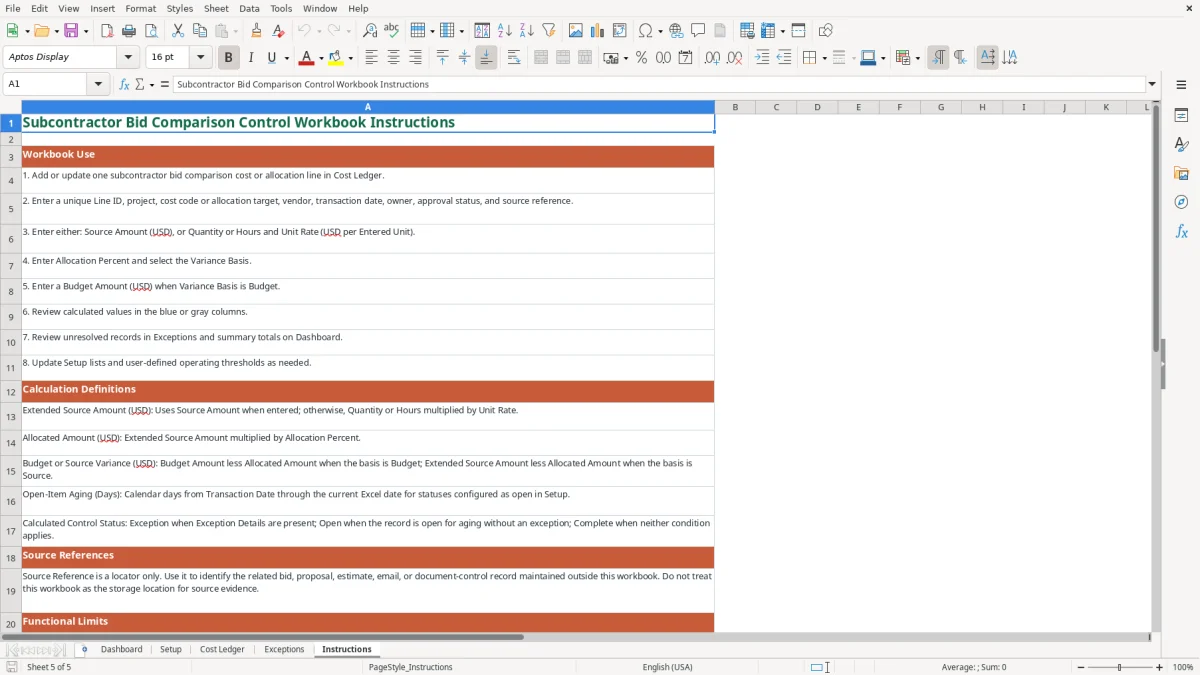
Four views generated from the verified XLSX.
How to use this workbook
Set internal controls
Begin on Setup. Enter your internal open-item aging alert days and variance alert threshold in USD. Maintain the available project, cost code or allocation target, entered unit, allocation basis, variance basis, owner, and approval-status lists. These values create internal workbook alerts only; they do not establish contractual, payment, legal, or regulatory requirements.
Register each comparison line
In Cost Ledger, enter one unique Subcontractor Bid Comparison Line ID per record. Add the project, bid package or scope, cost code or allocation target, vendor, worker, or asset, transaction date, record owner, approval status, and source reference. Enter dates in m/d/Y format. Use the source reference to locate supporting material maintained outside the workbook.
Enter cost and allocation data
Enter either Source Amount in USD, or Quantity or Hours with Unit Rate in USD per Entered Unit. Select the entered unit used by your team, such as LS (lump sum), EA (each), HR (hours), LF (linear feet), SF (square feet), or CY (cubic yards). The workbook does not convert units. Enter Allocation Percent, select Variance Basis, and enter Budget Amount in USD when the basis is Budget.
Review calculated results
Review Extended Source Amount, Allocated Amount, Budget or Source Variance, Open-Item Aging, Exception Details, and Calculated Control Status. Use Exceptions for unresolved records and correct the source line in Cost Ledger. Use Dashboard for totals, open items, aging alerts, exception counts, and grouped project or cost-target summaries.
Benefits
Keep subcontractor bid comparison cost and allocation lines in one USD register.
Assign a project, cost target, owner, approval status, and source locator.
Review calculated allocation, variance, aging, and exception details together.
Summarize registered lines by project and cost code or allocation target.
Features
Five worksheets: Dashboard, Setup, Cost Ledger, Exceptions, and Instructions.
Cost Ledger input lists for key project-controls fields and status selections.
Calculated extended source amount, allocated amount, variance, and aging days.
Dashboard summaries for projects and cost codes or allocation targets.
Subcontractor bid comparison cost register
This workbook centers on a subcontractor bid comparison line, rather than bid opportunities or a complete procurement workflow. Each Cost Ledger record can identify the project, bid package or scope, cost code or allocation target, vendor, transaction date, amount inputs, allocation basis, approval status, accountable owner, source reference, and notes.
Use Source Reference as a locator for a related bid, proposal, estimate, email, or document-control record. Supporting evidence remains outside this workbook, and the workbook does not validate the linked or referenced material.
USD allocation and variance calculations
Extended Source Amount in USD uses Source Amount when entered. Otherwise, it uses Quantity or Hours multiplied by Unit Rate in USD per Entered Unit. Allocated Amount in USD equals Extended Source Amount multiplied by Allocation Percent. These are calculated outputs based on user-entered amounts, rates, and allocation assumptions.
With Budget selected as the Variance Basis, Budget or Source Variance equals Budget Amount in USD less Allocated Amount in USD. With Source selected, it equals Extended Source Amount in USD less Allocated Amount in USD. Missing inputs can leave results blank.
Exception and aging follow-up
Exception Details identifies calculated control issues, including duplicate line IDs and missing core information. The Exceptions worksheet lists unresolved Cost Ledger records with the line ID, project, cost target, vendor, approval status, variance, aging, source reference, and record owner. Update the originating ledger record to resolve an item.
Open-Item Aging counts calendar days from Transaction Date through the current Excel date for approval statuses configured as open in Setup. Calculated Control Status is Exception when exception details exist, Open when aging applies without an exception, and Complete when neither condition applies.
Workbook scope and limits
Dashboard summarizes registered lines, Extended Source Amount in USD, Allocated Amount in USD, Budget or Source Variance in USD, open items, exception lines, and aging alerts. It also groups selected results by project and by cost code or allocation target for internal review.
This is an internal project-controls aid. It does not replace source systems, field verification, contractual authority, accounting, tax, payroll, insurance, audit, legal review, professional judgment, or regulatory determinations. Review results against your supporting records and team decisions.
Frequently asked questions
What information belongs on each cost ledger line?
Enter a unique line ID, project, bid package or scope, cost code or allocation target, vendor, transaction date, amount data, allocation basis and percent, variance basis, record owner, approval status, and source reference. Enter either Source Amount in USD or Quantity or Hours with Unit Rate in USD per Entered Unit. Add Budget Amount in USD when using the Budget basis.
Does this workbook choose the lowest subcontractor bid?
No. It organizes user-entered comparison cost and allocation lines and provides calculated status views. It can summarize values by project and cost target, but it does not select a bidder, verify scope completeness, evaluate qualifications, or make an award decision.
How is open-item aging calculated?
For approval statuses configured as open in Setup, the workbook counts calendar days from the entered transaction date through the current Excel date. Dashboard aging alerts use the internal threshold entered in Setup. The team controls both status configuration and the threshold.
Can Source Reference prove a bid or approval?
No. Source Reference is a locator for a related bid, proposal, estimate, email, or document-control record held outside the workbook. The workbook does not validate source documents, certify approval, determine payment, or confirm record accuracy.
Workbook file
Ready to put this workbook to work?
Download the verified XLSX, keep an untouched copy, and adapt a working copy to your project.
Download verified XLSXEditorial team
About the authors

Paige Sutton Vale
Workbook Systems Editor
Paige turns construction planning, cost-control, field, and closeout workflows into clear Excel workbook guides. She focuses on inputs, calculations, outputs, and practical limits.

Maren Ellsworth Keel
Workbook QA Reviewer
Maren reviews formula behavior, field labels, project-controls terminology, and workbook instructions so each resource stays within its documented scope.